 Support
High Operational and Replenishment Costs
Frequent hardware refresh cycles, device-level patching, and hands-on troubleshooting inflate operating costs and increase dependency on local IT support.
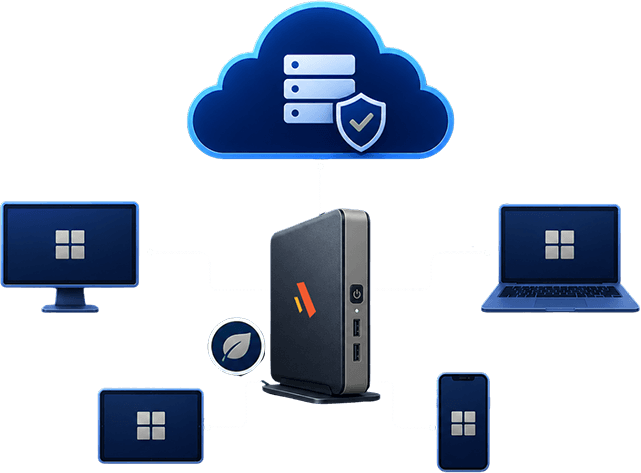

Despite improvements in endpoint security tooling, conventional PCs continue to introduce structural limitations.
Frequent hardware refresh cycles, device-level patching, and hands-on troubleshooting inflate operating costs and increase dependency on local IT support.

Desktop PCs typically consume significantly more power than thin clients, increasing energy costs across the endpoint estate. Under standard office usage (8 hours per day, 260 days per year), a desktop consumes roughly 156 kWh annually, compared to about 21 kWh for a thin client, reflecting the impact of lower power draw at the endpoint.

Application deployment, OS upgrades, and security updates are often performed device by device, slowing response times and increasing administrative effort.

Local storage of applications and data increases the risk of malware, unauthorised software installation, and data leakage, especially in distributed or shared environments.



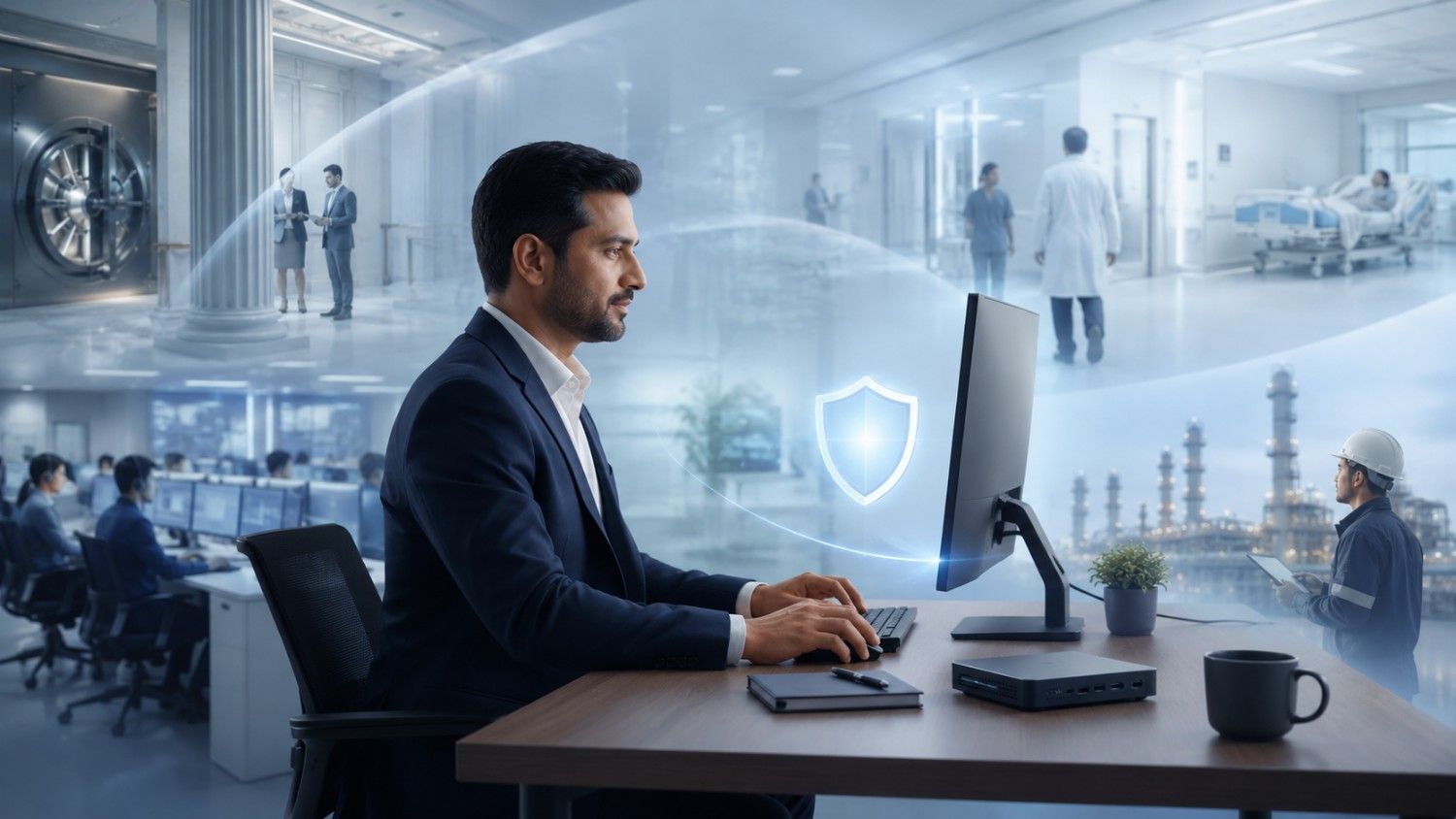
Enable secure, centralised access to sensitive applications such as CBS and SWIFT through VDI accessed via centrally managed thin clients, while meeting air-gapped, audit, and regulatory requirements.
Support large hospital environments with centrally managed thin clients, rapid provisioning for clinicians and consultants, and strong patient data protection without local data exposure.
Deploy cost-effective, secure thin client solutions for large workforces, enabling Zero Trust access and simplified endpoint administration at scale.
Operate reliably in harsh environments using rugged, low-maintenance devices with extended hardware lifespan and minimal power draw.